
Lucky 7 rules: seven balls, and a lot of markets.
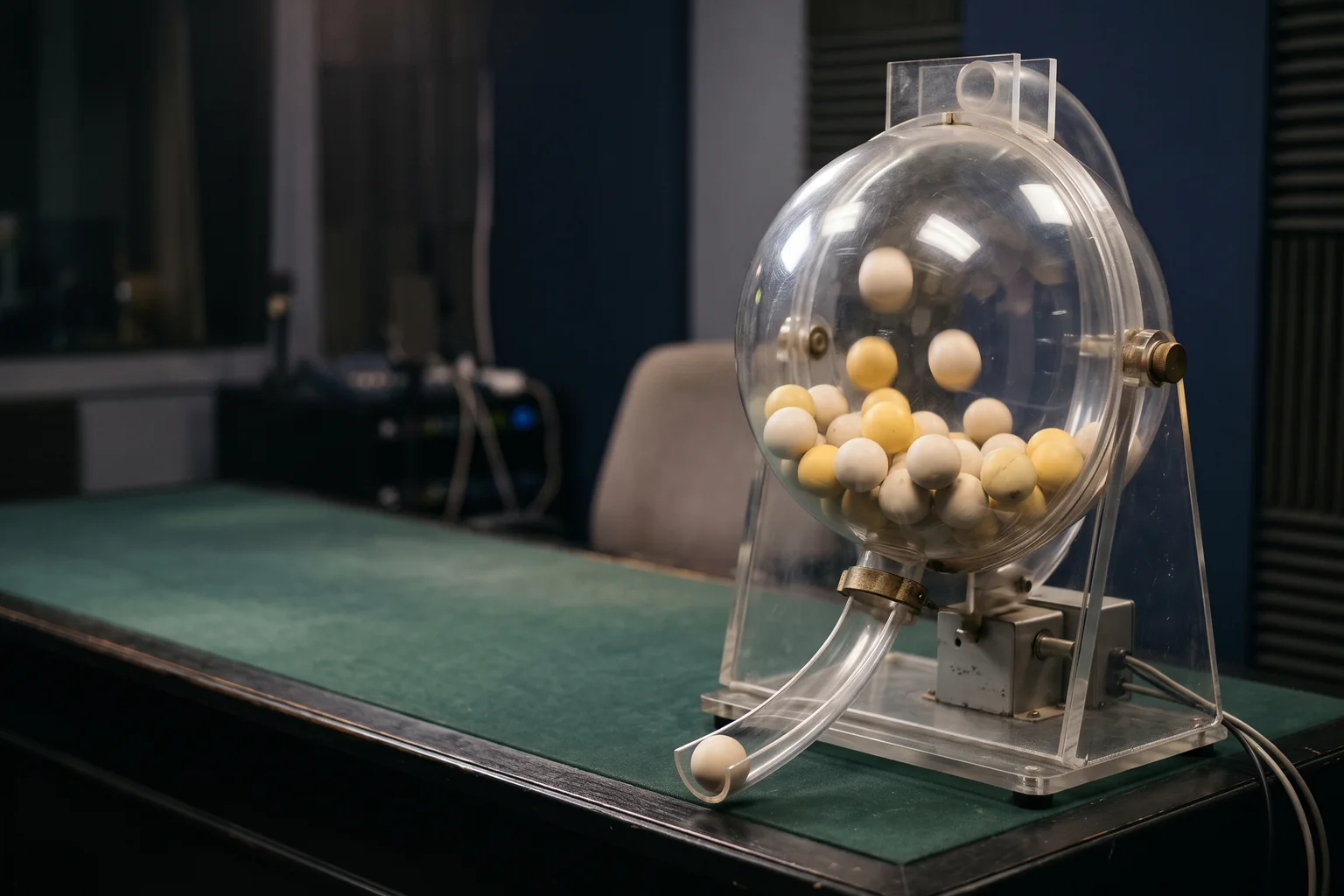
A draw game rather than a card game. Seven balls come out of a drum, and the betting is on what they turn out to be.
The draw
Seven balls are drawn from a drum of forty-two, split evenly between two colours. Everything you can bet on is a property of those seven balls, and all bets are placed before the first one comes out.
The markets range from the straightforward to the specific: whether a particular ball number appears, how the total of the seven compares with a line, and how the colours divide across the draw. Longer-odds markets combine several of those conditions.
Payouts and the number of markets vary between operators, so the paytable at the table you are on is the one that applies. That is worth checking before you stake: the return on the longshot markets is materially lower than on the simple ones.
How Roulette Streaks watches it
Lucky 7 is watched by absence: how many draws it has been since a given outcome last appeared. When that gap grows unusual for the market in question, the alert goes out with the count attached.
The draw itself is independent each time. A number that has not appeared for a long stretch is not due, and the alert does not claim it is.
Frequently asked
- What is Lucky 7?
- A live draw game rather than a card game. Seven balls are drawn from a drum of forty-two, and every bet settles on some property of those seven: a specific number appearing, the total against a line, or how the colours divide.
- How many balls are drawn in Lucky 7?
- Seven, from a drum of forty-two split evenly between two colours. Every market settles on some property of those seven balls.
- Does a number that has not appeared become more likely?
- No. Each draw is independent, and the drum is refilled every round. A long absence is unusual to observe, but it does not change the odds of the next draw.